Recent Climate Updates

SA:  The articles and commentary below capture some of the rapidly growing alarm at the escalating crisis:

THIS ONE IS VITAL The heat is on over the climate crisis. Only radical measures will work: “Drowned cities; stagnant seas; intolerable heatwaves; entire nations uninhabitable… and more than 11 billion humans. A four-degree-warmer world is the stuff of nightmares and yet that’s where we’re heading in just decades….However, that global heating took place over many thousands of years. Even at its most rapid, the rise in CO2 emissions occurred at a rate 1,000 times slower than ours has since the start of the Industrial Revolution. That gave animals and plants time to adapt to new conditions and, crucially, ecosystems had not been degraded by humans.The good news is that humans won’t become extinct – the species can survive with just a few hundred individuals; the bad news is, we risk great loss of life and perhaps the end of our civilisations. Many of the places where people live and grow food will no longer be suitable for either. Higher sea levels will make today’s low-lying islands and many coastal regions, where nearly half the global population live, uninhabitable, generating an estimated 2 billion refugees by 2100. Bangladesh alone will lose one-third of its land area, including its main breadbasket.”

Climate Change and the New Age of Extinction by Elizabeth Kolbert: “On the order of a million species are now facing extinction, “many within decades.” “What’s at stake here is a liveable world,” Robert Watson, the chairman of the group, Intergovernmental Science-Policy Platform on Biodiversity and Ecosystem Services, told Science.”

A paper raising concerns about negative emission technologies: “Recent publications, however, raise concerns about the broader political and economic feasibility of compatible emission trajectories, which typically rely on large-scale deployment of Negative Emission Technologies (NETs)—a type of pilot backstop technology that is often associated with enormous amounts of natural land loss, stranded assets by 2100, a potentially dangerous emission overshoot level and resulting fundamental ethical issues of intergenerational equity”

Commentary by Zoe Williams about the issue of climate hypocrisy in our individual lives:  “The counsel of perfection, looking for the hypocrisy in anyone taking a position distinguishable from naked self-interest, is actually slightly worse than a counsel of despair: it takes pointlessness one step further, besmirching everyone, sucking the energy out of everything. Nobody will ever be good enough on these terms. You might eschew planes but get caught eating a burger; you might be a vegan, but have you seen the environmental cost of soya?

The climate emergency, being a crisis, needs radical action; transfer that on to any individual, and the only way not to be a hypocrite is to live off-grid, the downside of which is that, now, you have removed yourself from culture, and even if anyone gets to hear of you it’s as a crank.”

Lessons From a Genocide Can Prepare Humanity for Climate Apocalypse By Roy Scranton: “One historical analogy stands out with particular force: the European conquest and genocide of the indigenous peoples of the Americas. Here, truly, a world ended. Many worlds, in fact. Each civilization, each tribe, lived within its own sense of reality — yet all these peoples saw their lifeworlds destroyed and were forced to struggle for cultural continuity beyond mere survival, a struggle that the Anishinaabe poet Gerald Vizenor calls “survivance.”

The philosopher Jonathan Lear has thought deeply about this problem in his book Radical Hope. He considers the case of Plenty Coups, the last great chief of the Apsáalooke people, also known as the Crow tribe.

Plenty Coups guided the Crow through the forced transition from life as nomadic warrior-hunters to peaceful, sedentary ranchers and farmers. This transition involved a harrowing loss of meaning, yet Plenty Coups was able to articulate a meaningful and even hopeful way forward.”

The world is heating faster than previously thought: “Over the past two years, we’ve learned that key impacts of climate change, like the melting of ice, the rise in sea level, and the increase in devastating weather extremes, are playing out faster than our models projected just a few years ago,” said Michael Mann of Penn State.

Slow burn? The long road to a zero-emissions UK:“In the end, it will simply not be possible to reduce Britain’s fossil-fuel emissions to zero, say scientists. To compensate, we will have to take carbon dioxide back out of the atmosphere. “That is the logical, inevitable consequence of trying to achieve zero net emissions in this country,” argues Corinne Le Quéré, of the University of East Anglia. ‘If you are looking for any net zero target then you have to remove carbon dioxide from the atmosphere.’”

And a poem from 2005
Thanks

Listen
with the night falling we are saying thank you
we are stopping on the bridges to bow from the railings
we are running out of the glass rooms
with our mouths full of food to look at the sky
and say thank you
we are standing by the water thanking it
standing by the windows looking out
in our directions
back from a series of hospitals back from a mugging
after funerals we are saying thank you
after the news of the dead
whether or not we knew them we are saying thank you
over telephones we are saying thank you
in doorways and in the backs of cars and in elevators
remembering wars and the police at the door
and the beatings on stairs we are saying thank you
in the banks we are saying thank you
in the faces of the officials and the rich
and of all who will never change
we go on saying thank you thank you
with the animals dying around us
taking our feelings we are saying thank you
with the forests falling faster than the minutes
of our lives we are saying thank you
with the words going out like cells of a brain
with the cities growing over us
we are saying thank you faster and faster
with nobody listening we are saying thank you
thank you we are saying and waving
dark though it is

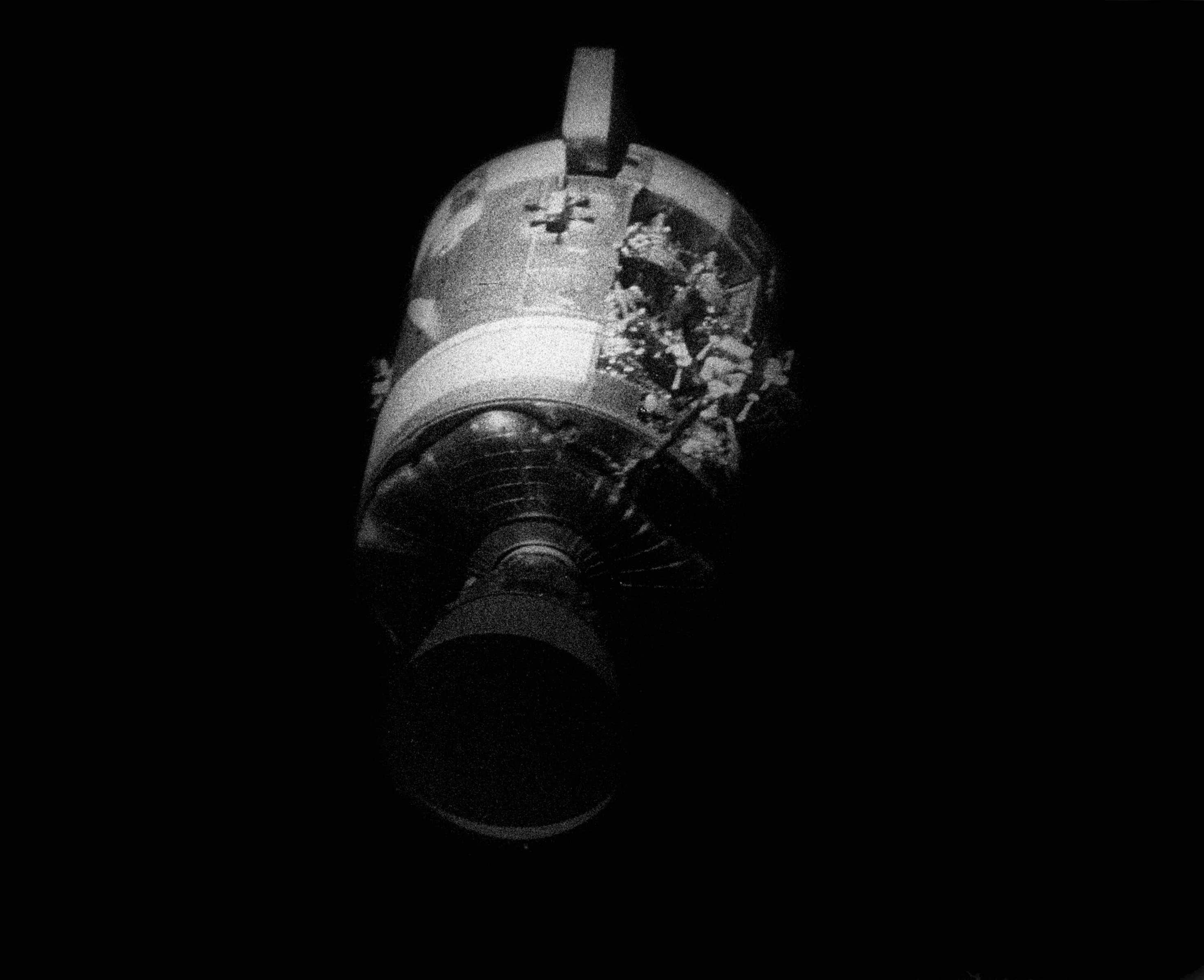
Apollo 13 is a great metaphor for our situation

Image result for apollo 13

By Steve Austin

The real life voyage – 49 years ago – and the movie – which turns 24 years old this summer – perfectly encapsulates our current predicament. A small, fragile spaceship – launched from a larger mothership  – travels through the infinite darkness of space toward a shinning goal.  Halfway there, the voyage is violently disrupted by a human error, unknown at the time of launch.  The situation is so drastic that all thoughts of reaching the goal are immediately dropped.  The only concern is with saving the lives of those on the spaceship.  Urgency was paramount: “its worse than they thought, Fred-o!” Nothing else matters and imaginations are rapidly unleashed to accomplish that.  Conservation immediately becomes the goal:  of air, water, food, energy.  If they were going to survive,  the people on board must adjust to uncomfortable conditions.  Unfortunately CO2 emissions rise on the spaceship, threatening the lives of the crew, necessitating a ingenious low-tech fix that no one had even considered before.  Ultimately, the crew is saved because of creative use of science, teamwork and a sense of shared community, and a will to succeed because failure was not an option.

Everything from the actual voyage is parallel to our current crisis, except for the last half.  Yes, we are on a spaceship traveling through space.  Yes, our mission controllers have a goal in sight:  endless economic growth.  Yes, the mission has been violently disrupted by human error:  a lack of understanding of the impact of endless growth within a closed, finite system.

Yet there is no talk of diverting from the goal of endless economic growth.  There is no talk of conservation, of adjusting to uncomfortable conditions, to having less. At mission control, there is no sense of alarm, even though the alarm warnings are going off.  There is little shared sense of community.  Without that, there is little hope that the crew (humanity) can be saved through imaginative use of science, teamwork, and a will to succeed.  In our current case, failure is very much an option.

There is no little irony in that back then the world stopped in breathless anticipation while scientists attempted to save three men on their tiny spaceship while today…the world goes on as if nothing is happening.

Electric cars won’t save us #3

Screen Shot 2019-06-01 at 11.21.23 AM

by Steve Austin

Many otherwise ecologically aware people continue to promote electric vehicles as one of the needed pieces of technology for the post carbon era.  If only we could have fleets of them driving around, why then we can continue “life as we know it” but just in a “greener” way.

But this is on its face incompatible with the climate emergency.  Climate science urgently tells us that we must end all fossil fuel use and other CO2 emissions very soon.  Unfortunately, electric cars are made of and with fossil fuels; there is no alternative.  Fossil-fuel derived plastics comprise up to 50% of electric vehicle’s in order to make them lighter and extend the range of the batteries. Electric vehicles also have large amounts of lubricants and synthetic rubber within them.  Mining and manufacturing the metal components of an electric vehicle both require enormous amounts of fossil fuels as well as emit CO2 from the chemical process of making steel. (Not even touching on the ecological issues surrounding the creation and lifespan of batteries – currently mining cobalt is a human rights abuse.)

Further, the infrastructure for cars of any type – streets, roads, highways – is completely dependent on fossil fuels.  From high carbon asphalt and concrete surfaces – which emit copious quantities of CO2 during their creation – to the fossil fueled machines that create and maintain them, our auto centric transportation is incompatible with what science says we must do.

Then there is the issue of electricity to power these vehicles.  In the post carbon world, electricity will be forced to provide much more than the 20% of global energy it provides today.  Thus, there will be immense demands made on electric supplies.  However, even if solar, wind, hydro, and tidal grows exponentially over the coming years, it will never come close to replacing all the energy we currently use from fossil fuels.  It is extremely unlikely that there will ever be enough electricity to  power a global fleet of hundreds of millions –  if not billions of electric vehicles  – in addition to providing for light, heat, cooling, and manufacturing processes.   At some point it would also become an ethical issue:  just what should we be using our limited electricity on?  Using it to allow individuals and small groups to putter around surely wouldn’t be that important.

Electric vehicles are a fantasy that allows some to envision a post carbon future that somehow looks like today.  But if the science is real – and it is –then all CO2 emissions must cease within 30 years.  And we must begin to rapidly develop ways to draw down the excess CO2 that is already causing such devastation.

The post carbon world will be drastically different than today’s.  Could be worse.  Could be a lot better.  But it will not be basically the same as today.  This will require us to rearrange every single thing in our lives, from where we live, to how we move around, to how our food gets to us, to planning cities.  The longer we maintain the fantasy that electric cars will save us, the worse the damage will be.

Quoting myself about the electric car fantasy:  “it hurts the cause: when deniers see commentary like this they can rightfully say, ‘it can’t be too bad if all it will take is electric cars to solve it.’  To them, and to perhaps the majority of Americans, promoting electric cars seems to make dealing with climate change about lifestyle choices, instead of the radical reimagining of our civilizational structure that addressing the climate peril demands.”

Of course, it may be that the climate crisis isn’t really one, and that this is really just an effort to get us to live “greener.”  If it is truly a crisis, then those who profess that it is  must be made to reconcile their promotion of electric cars with ending the crisis. They need to explain how electric cars are compatible with the “rapid, far-reaching and unprecedented changes in all aspects of society” that the UN says are needed to keep heating below 1.5C.

UPDATE:  One of the most prominent shills for electric vehicles – for trying to keep life as it is in the face of the crisis – recently posted this relative to Trump’s assault on science: In the words of Swedish climate activist Greta Thunberg, a force of nature at just 16 years old, “You don’t listen to the science because you are only interested in solutions that will enable you to carry on like before. Like now. And those answers don’t exist any more. Because you did not act in time.”

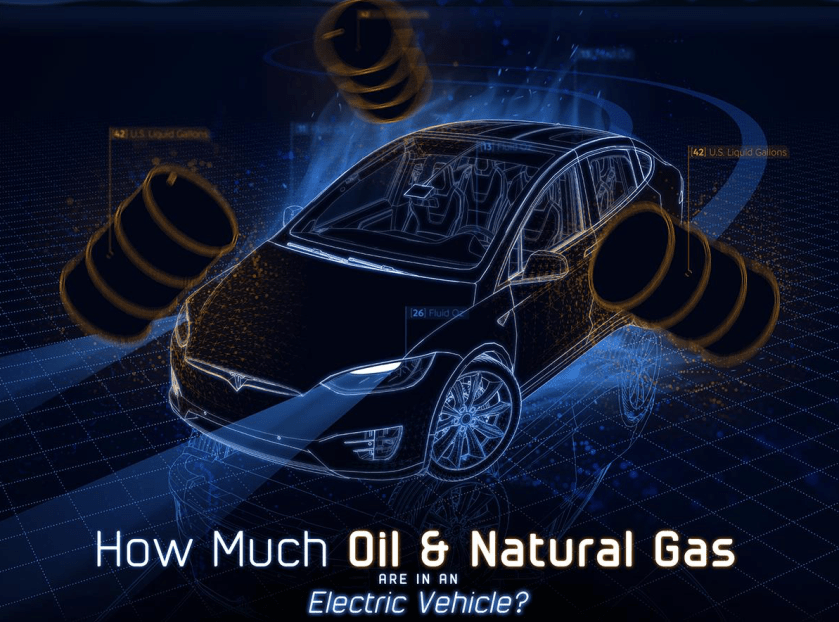
Click here to see a graphic revealing just how soaked in oil an electric car is. (And yes, I realize that the information is provided by a pro-oil – thus pro climate apocalypse – organization. But they do provide the inconvenient facts about electric cars.  I think they are un-ironically doing it as a booster of electric cars.)

Read more here:


Why It Is Too Late for the Green New Deal (As Presently Envisioned)

“We live in a strange world. Where we think we can buy or build our way out of a crisis that has been created by buying and building things.” Greta Thunberg

By Bill Henderson, originally published by Resilience.org

We all owe a huge debt of gratitude to those who have articulated the Green New Deal (GND), especially Rep. Alexandria Ocasio-Cortez and the Sunrise Movement. We needed something that focused attention on how serious climate change has become and the need for government action. The GND has shattered the neoliberal insistence upon incremental, market-oriented climate mitigation.

But, considering the emerging climate science and our diminished carbon budget after at least three decades of denial, and with carbon concentration in the atmosphere higher than it has been in 3 million years, it is too late to speed up the slow transition from fossil fuels to renewables with government facilitated renewable building; too late to build renewables under a Keynesian plan that employs all the workers in transition; too late for a transition that makes money and lets us keep living our present lifestyles.

The GND challenged neoliberalism with a “Big Government Plan” for climate mitigation, but as presently envisioned, these policy actions remain completely within a market transition where renewables will only replace fossil fuels by out-competing coal, oil and natural gas. Continue reading “Why It Is Too Late for the Green New Deal (As Presently Envisioned)”

Pro sports travel: the climate backlash is beginning

As English fans get set to cross Europe, anger rises at football’s carbon bootprint

Planes going to the finals in Spain and Azerbaijan will emit 35,000 tonnes of carbon dioxide – climate activists want change

From The Guardian: “At a time of heightened fears over the impact of climate change, caused by rising fossil fuel emissions, the matches’ effect on the environment is seen by many as dangerous and inexcusable. And others warn that the problem will get worse next year when the Euro 2020 finals are held in a new transcontinental format that will greatly increase the amount of travel for supporters as their teams move back and forth across Europe.”

Read the rest here

And this is America today…

SA:  Our favorite president, to whom climate change is a hoax and thus there is no need for renewable energy, tells us what American’s really want: “When the wind doesn’t blow, you don’t watch television that night.”

Yep, if we cant count on watching TV every night, we have no country.

But he does care about birds. “You want to see a bird cemetery? Go under a windmill sometime. You’ll see the saddest… you got every type of bird,” Trump insisted.”You know, in California you go to jail for five years if you kill a bald eagle. You go under a windmill, you see them all over the place,” he continued, calling it “not a good situation.”

Please think of the birds.

Here’s how you know climate change is real

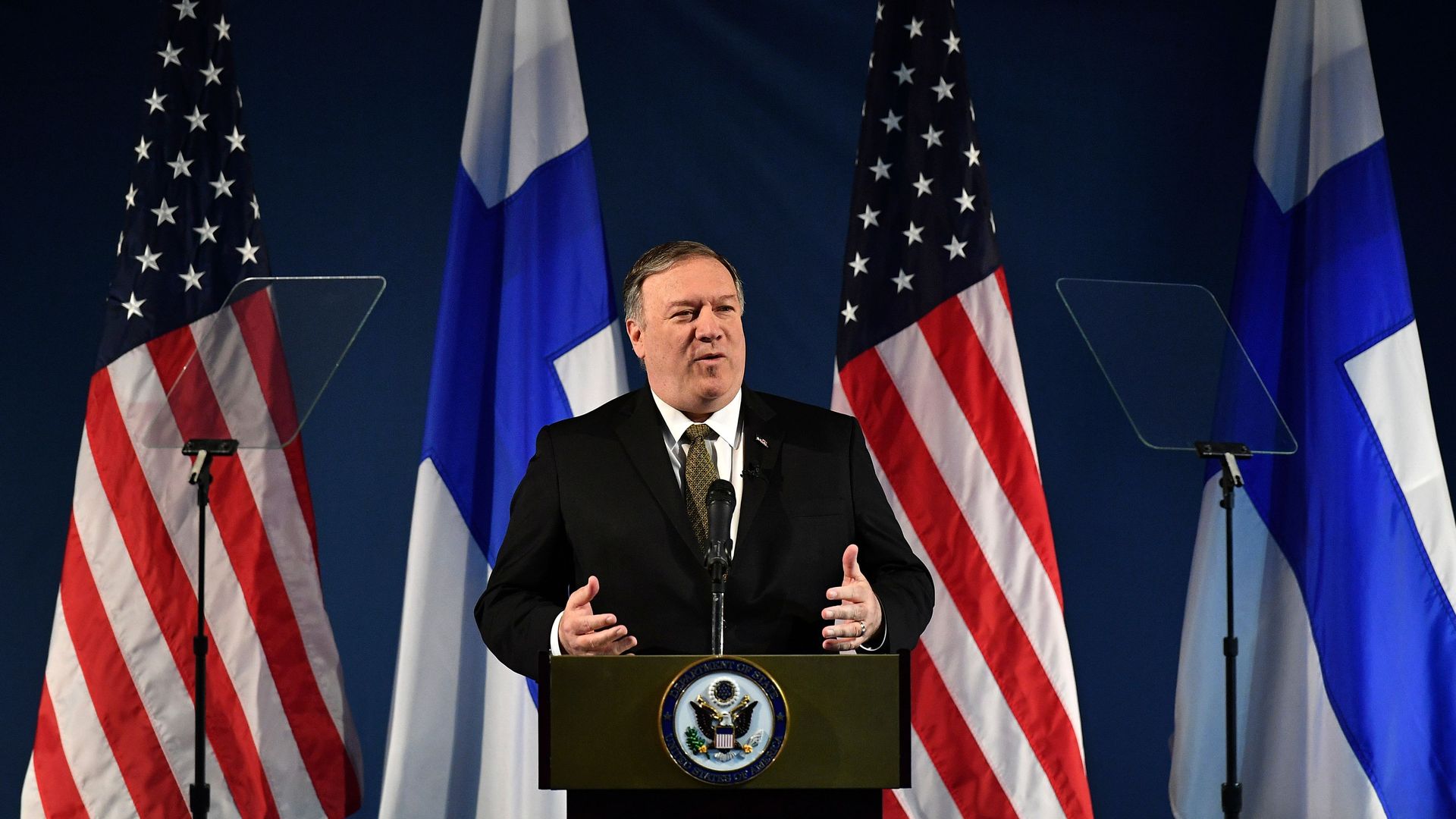
SA:  When a Trump Republican says this: “Steady reductions in sea ice are opening new passageways and new opportunities for trade. This could potentially slash the time it takes to travel between Asia and the West by as much as twenty days.”

That’s Secretary of State Mike Pompeo on Monday May 6, 2019.  He offered no explanation of why the reductions of sea ice are happening. But from the looks of it in the picture below, he’s pretty chuffed that it is.  Cause, you know, aint nothing more exciting than getting crap here from China twenty days sooner.  That will make everything all right.  (P.S., he knows why its happening…or else he wouldn’t have said “steady reductions” in ice – that means he’s listening to scientists)

Image result for Pompeo arctic conference

Bill McKibben eloquently tells us the rest of the story: “As the fastest warming part of the planet, it offers a terrifying preview of what’s coming. Its white ice once deflected most of the sun’s incoming rays back out to space; now the blue water that’s replaced it absorbs the incoming solar radiation, amping up global warming. Meanwhile, the melting permafrost produces clouds of methane, itself a potent greenhouse gas. The newly open Arctic Ocean alters weather patterns, catching the jet stream in a way that makes for prolonged drought or flooding at lower latitudes. The rapid melting of Greenland’s great ice sheet seems to threaten the continued operation of the great ocean currents that warm northern Europe. And on and on—of all the scary spectacles on our Earth, none tops a fast-thawing north. But not to Pompeo, who looks to the Arctic and sees oil, gas, gold, and diamonds. It’s as if Gollum were Secretary of State.”

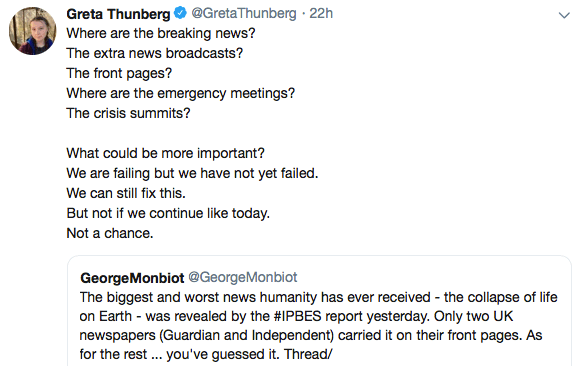
“The worst news humanity has ever received”…have you heard about it?

Nature’s Dangerous Decline ‘Unprecedented’
Species Extinction Rates ‘Accelerating’

from Intergovernmental Science-Policy Platform on Biodiversity and Ecosystem Services (IPBES)

Screen Shot 2019-05-08 at 7.55.00 AM

How long did this stay in the news cycle? Did you even hear about it?  Spokane’s KREM 2 News on Monday May 6 gave it about 30 seconds at 6:42pm during the newscast.  No cause of this was reported – just that nature was in decline – and the solutions offered were to eat less meat and walk and bike more.  Anyone who was listening would have no understanding what this was about. And then it was gone and on to the next thing.