In the climate crisis, a vision of Shade Cities

© Steve Austin (used with permission)

By Steve Austin, JD | ASLA | Assistant Clinical Professor of Landscape Architecture, Washington State University

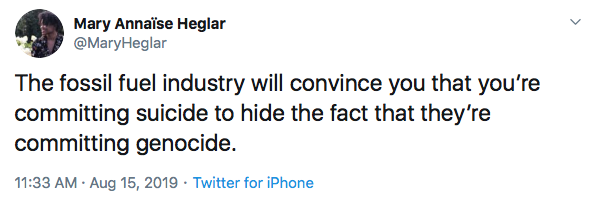
A heat wave unlike any other has begun in the U.S.  This is the long-term heat wave accompanying the accelerating climate crisis, which is caused primarily by the burning of fossil fuels.  Global heating is happening, despite presidential claims that it’s a Chinese hoax, despite fossil fuel companies’ best efforts to confuse, and despite many people’s resulting disinterest.  Regardless and urgently, in the face of reality, we need to create “Shade Cities” to ensure urban livability over the coming decades. 

It is getting hotter, faster. Industrial civilization has already raised the average global temperature by 1.8 degrees Fahrenheit above historical levels.  Eighteen of the last nineteen years have been the hottest on record, and the heating over the past four years has been “exceptional.” July 2019 was the hottest month ever recorded. This added heat is altering the Earth’s climate system with devastating impacts.

This is happening right now. Unless we stop burning fossil fuels very soon, the future will be even hotter.  

If we don’t stop burning fossil fuels, reasonable estimates are that average daily summer temperatures in US cities could increase by seven degrees or more over the next 50 years. This is obviously well within the lifetime of people alive today.  Extremely hot days – those with a heat index above 100 degrees – will also increase.  New research suggests that by mid-century, more than 250 U.S. cities will experience thirty days or more per year above that mark in a typical summer, compared to just 29 US cities historically.  

Exacerbating this, the urban heat island effect can additionally increase temperatures more than 20 degrees above those air temperatures, particularly after sunset.  The bottom line is that even “normal” summers will become incredibly hot.   “The rise in days with extreme heat will change life as we know it,” says Rachel Licker of the Union of Concerned Scientists. 

This will impact the country in many negative ways.   First and foremost, this is a looming health emergency, especially for vulnerable populations of youth, elderly, outdoor workers, the unsheltered, and those without access to cooling.  This heat wave will also continue to erode our already crumbling infrastructure.  Further, dealing with extreme heat will cost businesses and individuals money, further stressing economic and social conditions.


Unfortunately, cities in the U.S. do not appear to be anticipating either the heat wave or the associated impacts.  So much needs to be done, from new city planning paradigms, to connecting vulnerable populations with improved social and health services, to ensuring the reliability of the electric grids. 

Fortunately, there is one basic action that can help us adapt to the hotter reality:  planting trees. By starting to plant trees now, and absolutely everywhere possible, they will be mature when the heat wave reaches new extremes. 

Planting trees creates multiple victories for U.S. cities. Trees improve air quality, add beauty, and sequester carbon, which will be vital in restoring a livable atmospheric CO2 balance. They also filter and slow rainfall runoff, which will increase in amount and intensity in a hotter world; trees can help to reduce the impact of flash floods. Most importantly for the heat wave, trees will provide shade. New research shows that cities with robust urban forests are cooler by as much as 10 degrees Fahrenheit. 

Access to this shade in the increasingly hot time will be a social justice issue.   Poorer neighborhoods generally have much less tree cover than their wealthier neighbors. Lack of shade must not become another indicator of inequality in our communities:  access to it will be as vital as access to water and health care.  

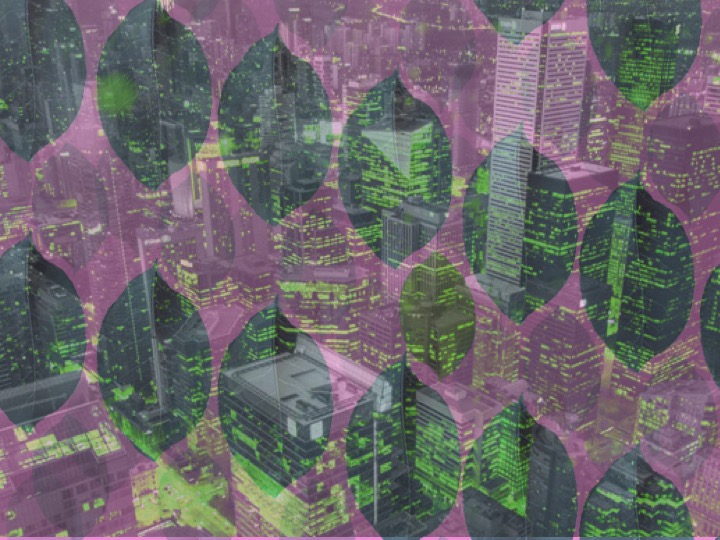
In acknowledgment of the crisis, communities should begin developing “Shade City” plans to plant billions of trees in American cities.  This is beyond anything ever attempted in U.S. urban planning and will change everything about how planning is now done. From now on, one of the first questions of city planning should be:  “what about the trees?” Crucially, these plans should focus on creating diverse urban forests with climate appropriate trees and not simply a monoculture.  Trees should be planted in parks and around schools, churches and hospitals, factories and streams, along streets and trails, and in so many other places.  Much of the 25 to 40% of urban areas made of pavement and parking lots should be ripped up to make way for trees.  And of course every single homeowner should add to the forest. 

To accomplish the Shade City vision, a long-term sense of institutional and personal stewardship is needed, as is funding for planting and maintenance. This stewardship will mark a vital step toward repairing our relationship with the rest of nature.  Positively too, this is economic development in the climate emergency era– think tree nurseries – as well as a job creation opportunity: imagine a Shade City Corps, modeled on the Civilian Conservation Corps, to plant and maintain trees as part of the Green New Deal. 

Shade Cities can be our gift to the future.  And even if a disbelief in the climate crisis is central to your dream of making the U.S. great again, please help plant trees, just in case. The climate crisis isn’t stopping simply because you wear a red hat.  That’s not throwing shade, that’s pleading for some. 

June was the warmest June ever recorded, but there’s a bigger problem

Average June temperatures in 2019.
Temperatures in June 2019 – note the USA

From Mashable: In 139 years of record-keeping, this June was the warmest June ever recorded. But June 2019 also revealed a deeper warming reality. 

The first half of 2019, January through June, finished up as the second warmest half-year on record, newly released NASA data shows. On top of that, each of the last five January through Junes are now the five warmest such spans on record. Only 2016 started off hotter than 2019. 

“At this point, the inexorable increase in global temperatures is entirely predictable,” said Sarah Green, an environmental chemist at Michigan Technological University. She noted that NASA’s updated data is added proof that climate models have accurately predicted Earth’s continued warming as heat-trapping gasses amass in the atmosphere.

“As we have shown in recent work, the record warm streaks we’ve seen in recent years simply cannot be explained without accounting for the profound impact we are having on the planet through the burning of fossil fuels and the resulting increase in atmospheric greenhouse gas concentrations,” added climate scientist Michael Mann, the director of the Earth System Science Center at Penn State University.

The end of concrete?

SA: Wow. Most people have very little idea that a post carbon future wont include much concrete. Cement, the main ingredient in concrete cant be made without enormous CO2 emissions. As of now, there is no way to mitigate those emissions. The result will be a built environment vastly different than today.

From CNN: “The cement sector needs to dramatically reduce the contribution it makes to climate change. Delaying or avoiding this challenge is not an option,” Stephanie Pfeifer, CEO of IIGCC, said in a statement. “This is ultimately a business-critical issue for the sector.”

Firms that don’t move quickly to change their practices risk losing access to capital, according to the investors. With no clear single route to decarbonization, they recommend the companies pursue a range of options. Cement makers must “get ahead of the profound transformation (emphasis mine) their sector faces by addressing barriers to decarbonization in the short- to medium-term,” said Pfeifer, the IIGCC chief executive.

Landscape Architecture and the Zero Carbon Generation

source: creative commons

By Steve Austin, JD | ASLA | Assistant Clinical Professor of Landscape Architecture, Washington State University

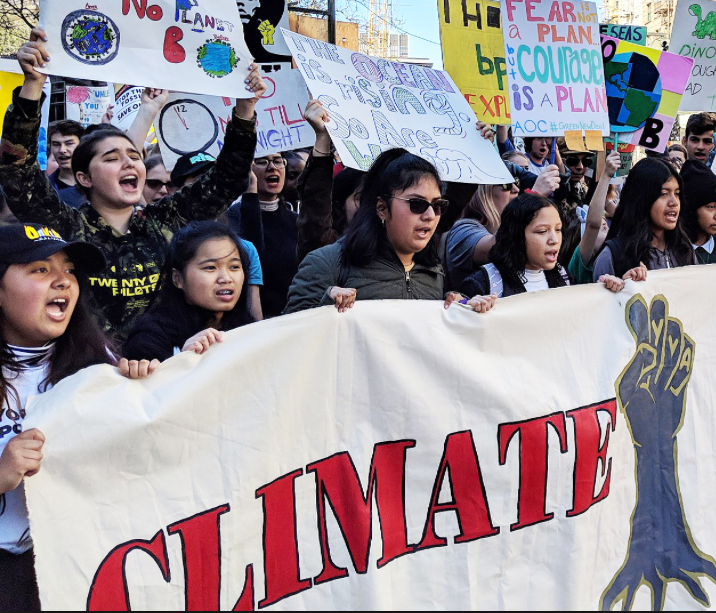
As the climate crisis intensifies and accelerates, a new generation of activists is emerging with startling suddenness.  In an effort to stem this crisis, many young people are mobilizing rapidly.  

Members of this group, styled “Generation Z,” were born within the last 25 years.  Although derided by some as “snowflakes,” these young people are the largest generation in history. Bloomberg reports Generation Z will comprise “32 percent of the global population of 7.7 billion in 2019, nudging ahead of millennials, who will account for a 31.5 percent share.” 

Around the world, and in the US, this is a group that understands climate change.  According to recent study by the Harvard Political Review, “Over 70 percent of the Gen Zers polled…agree that climate change is a problem, 66 percent of whom think it is a crisis and demands urgent action

This large a group, and one whose overwhelming majority understands the issues, will hold enormous power. Appreciating their activism would serve landscape architects very well in the coming years.  After all, they represent the future of the profession as practitioners, clients, and users. 

Generation Z is the first generation to have seen the effects of the climate crisis for their entire – albeit short, so far – lives.  Because of this, they understand climate change, and the associated ecological breakdown, as imperiling not just their economic and social futures, but their very existence.  This has created a great sense of urgency among many of them, leading to stunningly impactful actions within just the last few months.  

For example, it was less than 12 months ago that the then 15-year-old Greta Thunberg staged a solo protest at Sweden’s parliament to force action on global warming.  Since then, her School Strike for Climate has inspired millions of students around the world to do the same, and given her message significant global audiences. 

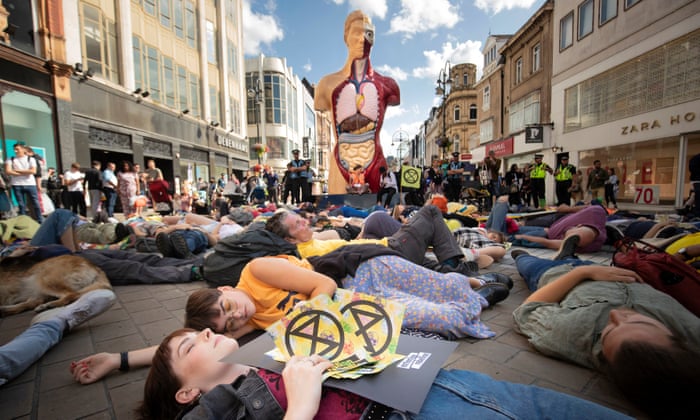
In the UK, the multi-generational but youthful Extinction Rebellion’s non-violent protests in April of 2019 led the British Parliament to declare a “climate emergency” in the United Kingdom, the first democratically elected government in the world to do so. At the same time,the UK government’s chief climate advisory agency recommended for the first time an accelerated plan to cut the country’s carbon emissions to zero by 2050.   Soon thereafter, Ireland’s parliament became the second national government to declare a climate emergency, followed by Canada.  They have been joined by hundreds of local and regional governments around the world. 

In the US, the youth-led Sunrise Movement has gained momentum, discussing climate change in “classrooms, living rooms, and worship halls across the country” and providing support for the Green New Deal.  And Juliana v. US, a lawsuit filed by 21 young plaintiffs against the US government is proceeding.  The young people allege that“through the government’s …actions that cause climate change, it has violated the youngest generation’s constitutional rights to life, liberty, and property, as well as failed to protect essential public trust resources.” 

However, the current Administration’s Department of Justice has responded to the suit by demanding that it be dismissed, stating:“there is no right to a climate system capable of sustaining human life….because such a right is entirely without basis in this Nation’s history or tradition.”

A Vision of the Future 

Undaunted by such callousness, the young activists are clear on one thing: they have accepted the climate science that warns that there is little time left to keep global temperatures from rising more than 1.5C, beyond which climate catastrophe looms. 

To avoid this, the laws of physics require that humanity cut greenhouse emissions by 45% within a decade and reach zero use by 2050.  Thus “Generation Z” must become the “Zero Generation.”  In order to achieve that, the youth of today will “have lifetime carbon budgets almost 90% lower than someone born in 1950.”

And most of that budget will be used in their youth: by the time they reach middle age, the Zero Generation will have no more carbon to burn. 

If these young people succeed in helping us to avert the worst of the climate crisis, they will usher in completely new paradigms for landscape architecture.  The end of carbon dioxide emissions means the end of fossil fuel use.  Unfortunately, the contemporary work of landscape architecture is thoroughly soaked in fossil fuels.  Not using them will change the way we approach design and education, as well as our materials and construction methods, how our projects are maintained and even our ethics.  Further, the need to drawdown excess CO2 from the atmosphere will require new approaches to every project.  

(Read more about Post-Carbon Landscape Architecture here.) 

In light of all this, how will landscape architecture respond to the youth of today?  Positively, the goals of our work should be broadly attractive to the Zero Generation; landscape architecture offers so many possibilities for mitigating, and adapting to, the climate crisis.  This should provide us with great support in terms of new practitioners, clients and users.

But to ensure that we do not perpetuate the intergenerational injustice of climate change, then we must truly align our work to the zero fossil fuels reality. This is not an issue that is going away or that will somehow get better on its own.  It will require enormous changes.  We should be leaders ourselves, not waiting on our children to push us. 

In the words of Greta Thunberg,  “I want you to act as you would in a crisis.  I want you to act as if our house is on fire. Because it is.” 

If protesting the end of civilization isn’t acceptable, then what is?

The quote below is in response to Extinction Rebellion’s wonderful protests across England in the summer of 2019:

“It is not acceptable to bring London to a standstill. It is not acceptable to close major routes in London, and build barricades and put obstacles into the road and secure them there that make it very, very difficult for us to move.” Laurence Taylor, the deputy assistant commissioner in charge of protest policing for the Metropolitan force. From The Guardian

Facing the Climate Emergency: Grieving The Future You Thought You Had

“If humanity’s two choices are to transform or collapse, the only rational, moral choice is to immerse yourself in the struggle to protect all life.
Above all, in order to live in truth, we have to grieve for our own futures—the futures we had planned, hoped for, and thought we were building.”
Read the whole thing here

Planting trees is vital, but it is only a part of averting the worst of the crisis

SA:  In early July, headlines like the one below abounded and were shared widely on social media.  This headline was especially infuriating:

Screen Shot 2019-07-05 at 3.16.25 PM

As people scan and share these types of headlines they give people the comforting impression that there is a way out of the mess we’ve gotten ourselves into.  They may believe that there really wont be any substantial changes needed to our current way of life.  That is very wrong.

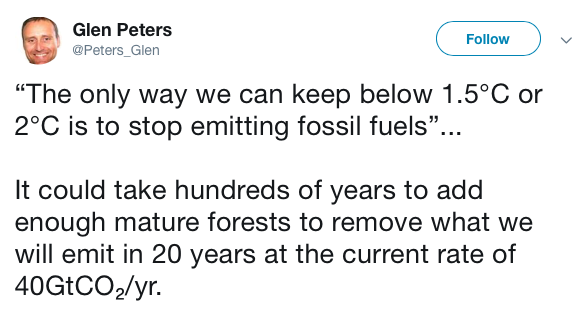
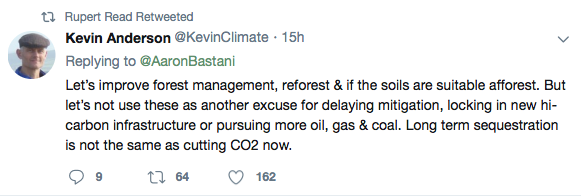
Planting trees on the scale recommended by this study will be vital.  But the most important thing that can be done is to end fossil fuel use as rapidly as possible.  Then the work of the trees in sequestering carbon can be useful over the longer term.  But if we do not end fossil fuel use soon, no amount of tree planting will help us.

Screen Shot 2019-07-05 at 3.22.50 PMScreen Shot 2019-07-05 at 3.23.28 PM

Screen Shot 2019-07-05 at 3.16.04 PM

Screen Shot 2019-07-05 at 3.31.21 PM

…and now back to normal

Screen Shot 2019-07-01 at 6.38.27 PM

By Steve Austin

Many believe that the climate crisis is now the greatest threat to civilization, surpassing nuclear war.  At least with nukes, we have had 74 years of not using them as well as actually working to reduce their sheer numbers over time. With climate change, we have been making it worse every year and we are ramping up our CO2 emissions even as we know what is causing the crisis.

In an attempt to address the crisis, certain well meaning people have made calls for a World War 2 type mobilization, (see here too)where the might of government and society are put to full use to solve the crisis. This sounds great:  everyone working together to defeat evil.   No doubt, there is a deep connection to the idea:  once we’ve defeated evil, we can get back to “normal,” just like in the 1940s.

Except it won’t work that way.  There will be no “and now back to normal.”  Ending the climate crisis will require us to mobilize and fight, not for a short time – less than 4 years in the USA’s case during World War 2 – but for decades, if not centuries.  We have made such a mess of our habitat that it will take that long to restore any sort of balance.

Mobilizing for World War 2 required government control of everything – rationing food and fuel and other things, managing industrial production, drafting human lives.  I have not heard of anything like that proposed to fight the evil of climate change.  This could be  due to the fact that no one really thinks it is that bad.  Indeed, even the well meaning come across as using the climate crisis as a political ploy in order to introduce other – albeit rightfully needed – reforms.  And that is another key point: mobilizing for war means that everyone is this country at least must agree that there is a common enemy.  Yeah….right.

No, fighting climate change will be nothing like World War 2.  If we are to succeed in fighting the evil, it will require us to understand that the cause is us – the way we live now makes us our own enemy.  And if we mobilize, it will be to change everything about how our civilization works.  Victory will be to live surrounded by the decay of the society that we built.  This will not get us parades and peace dividends.  We might get a saner, less destructive way of life, but with none of today’s conveniences let alone “necessities.”

There can be no “back to normal” and it is irresponsible to let people assume there can be.  If this is the ultimate crisis of civilization, then we must be honest about what surviving it entails.  There will be no short term push to victory, instead it will be a slog, every year doing with less than the last, until at some point the impact of our past actions have abated. This will require government – in a democracy, technically “us” – to agree to limit everything about our current lives.  And it will mean that there will be some clear losers, those whose life and business are built upon pollution and greed, and what about them in a democratic system?

At best we are living with a chronic condition: the disruption we’ve caused to the climate system will take a long time to undo.  At worst, this could be fatal: runaway climate is a distinct possibility and the tipping points into that condition are unclear.  We must mobilize, to be sure, not for a typical war’s duration, but for the rest of our lives.  I am personally in favor of everything related to Green New Deals and all the rest.  It’s just important that we know what we are in for.

Or, I hear there Netflix has some great stuff coming soon.