Stories like this make me scream, silently: breathless reporting about such and such city, nation, corporation going “carbon neutral!” This sounds so cool! So progressive! S0 painless! So easy!
But in reading this particular story – like many others – it becomes clear that all the carbon neutrality refers to is electricity generation and some transportation. “The carbon-neutral goal, as in other cities, only includes emissions from transportation, electricity, heating, and cooling (not, for instance, the footprint of the items that people buy that are made elsewhere and shipped in).”
Well of course, that’s the fucking easy part! In most countries, electricity generation provides approximately 20% of total energy use. The other 80% is always fossil fuels.
There is no shaming in this critique. Copenhagen’s goal is extremely admirable and should be replicated immediately by every city in the world.
But the carbon accounting listed above accounts for less than half of all carbon emissions that make the city run. There is no accounting for the emissions in building materials and construction, embodied emissions, infrastructure maintenance, all consumer products, most food, air transportation to and from the city, etc, etc.
And anyway, we must get to BELOW ZERO, not “carbon neutral.” Even if we were to succeed in becoming “carbon neutral” as a civilization, all it would mean is that we would stop the atmospheric CO2 concentration from rising. But there are already too many negative impacts from the CURRENT CO2 level. Therefore, we must be working on REDUCING CO2 levels. And this story absolutely shows that Copenhagen is not doing that. At best, they are helping to slow the increase. That ain’t enough.
Thus, it is misleading reporting to state that Copenhagen will be a carbon neutral city in 6 years. And it is deceptive to not investigate ALL the city’s emissions. This is irresponsible because it gives people the impression that becoming zero carbon/negative carbon really wont be that hard. That it won’t mean much change in their lives. But it will, it will. Far better for stories like these to report on the great strides, but also allow for an honest accounting of ALL carbon emissions associated with the city and what zero carbon will mean to it.
Things seem to carry a terrible freight these days. Swimming at Nielsen Park, in Sydney harbour, an ancient river valley filled by melting Ice Age waters that stabilised seven thousand years ago, I find myself wondering how high the water will rise again when the ice caps melt. ‘Every time I see a bird or bee these days,’ a friend says when we are talking on the phone, ‘I find myself wondering if it’s the last.’
The sense of loss is everywhere as each day brings news of unfolding disaster. Vanishing creatures are only part of a suite of ongoing catastrophes we are starting to recognise under the umbrella of the Anthropocene. Heating of the atmosphere and the rise of CO2, loss of forests, disruption of weather systems and sea currents, pollution from plastic and micro-plastics, and ocean acidification; together, these have accumulated the force of geological change, pushing us out of the stable patterns of the 12,000-year-old Holocene and into a human-influenced new epoch.
And yet within the small span of one’s own experience, it’s hard to measure causes and effects, let alone how fast things are turning. As the world becomes more unstable in the grip of vast and all-pervasive change, it’s difficult to discern exact chronologies, relationships and meaning. In this unfolding context, small things take on terrifying and uncertain correlations. It’s as if, I found myself thinking, as I scoured the water for fish, that in trying to see into the future we’re returning to the dread speculation of the past. We’ve entered a new age of signs and wonders.
As I see things, there are three broad possible futures that lie ahead:
This civilisation could collapse utterly and terminally, as a result of climatic instability (leading for instance to catastrophic food shortages as a probable mechanism of collapse), or possibly sooner than that, through nuclear war, pandemic, or financial collapse leading to mass civil breakdown. Any of these are likely to be precipitated in part by ecological/climate instability, as Darfur and Syria were.
Or
This civilisation (we) will manage to seed a future successor-civilisation(s), as this one collapses.
Or
This civilisation will somehow manage to transform itself deliberately, radically and rapidly, in an unprecedented manner, in time to avert collapse.
Any of these three options will involve a transformation of such extreme magnitude that what emerges will no longer in any meaningful sense be this civilisation: the change will be the kind of extreme conceptual and existential magnitude that Thomas Kuhn, the philosopher of ‘paradigm-shifts’, calls ‘revolutionary’. Thus, one way or another, this civilisation is finished. It may well run in the air, suspended over the edge of a cliff, for a while longer. But it will then either crash to complete chaos and catastrophe (Option 1); or seed something radically different from itself from within its dying body (Option 2); or somehow get back to safety on the cliff-edge (Option 3). Managing to do that miraculous thing would involve such extraordinary and utterly unprecedented change, that what came back to safety would still no longer in any meaningful sense be this civilisation.
That, in short, is what I mean by saying that this civilisation is finished.
SA: Excellent summary of the IPCC report in Summer 19 about how important land management will be to mitigating the climate crisis. By Robinson Meyer in the Atlantic.
“Nearly every American knows what our peculiar national grid of farm and field looks like. During a drive across the Midwest, it rolls past, flipbook-like: field-field-road, field-field-road. During a coast-to-coast flight, it unfurls outside the plane window like a vast Cartesian quilt, lines meeting lines at right angles, circles of irrigation locked within squares. This grid system, formally known as the Public Land Survey System, covers much of the land outside the 13 original colonies.
What every American may not realize is that this grid gives us a great advantage when thinking about area. Each of those grid squares is about one square mile. The Earth’s total land surface is about 52 million square miles. So we only get 52 million grid squares to work with as a species. While 52 million squares may seem like quite a lot, consider that each of them is worth incommensurately more than $1. At some point in the past, $52 million might have seemed like quite a lot of money. But now it cannot buy a 10-foot sculpture of an orange balloon dog.
These 52 million grid squares cannot only service our needs. They are all the land, period. They must also hold the vast, lovely, unknowable thing that we call nature—every shady spot, every mountain stream, every sand dune. (The IPCC authors call this, somewhat dryly, “biodiversity and ecosystem services.”) Every grain of rice and cobalt mine, every sidewalk square and platypus, has to be somewhere on that 52 million.”
“There are many ways for each of us to contribute to the Great Transition. The good news is we are not the first to think this way. Many other teachers, activists, lineages, cultures and traditions have called us back into right relationship with each other and the world. It is our job to put the pieces together and build coalitions that put everyone’s unique skills and capacities to work. None of us have all the answers, but collectively we can support each other’s learning journeys, connect, and build capacity for both the Great Transition and the Great Unraveling. This way we face both realities with our strongest capacities while supporting the best features of the Great Transition.”
“The gases heating the planet at higher levels in 2018 than humans have ever recorded, according to an authoritative report published by the American Meteorological Society and compiled by the US government.
Greenhouse gases were at levels unseen in 60 years of modern measurements and 800,000 years of ice core data, the study found. The data used in the 325-page report was collected from more than 470 scientists in 60 countries.
The global annual average for carbon dioxide, which is elevated because of human activities such as driving cars and burning fuel, was 407.4 parts per million, 2.4 ppm higher than in 2017. The warming influence of CO2 and other gases in the atmosphere is now nearly 43% stronger than in 1990.
2018 was the fourth warmest year since the mid-to-late 1800s. Temperatures were 0.3C to 0.4C higher than the average between 1981 and 2010. Only 2015, 2016, and 2017 were hotter.
Sea levels were the highest on record, and sea surface temperatures were also near a record high.”
SA: This is more like it. From a paper by Tim Jackson: “It is notable that reduction rates high enough both to lead to zero carbon (on a consumption basis) by 2050 and to remain within the carbon budget require absolute reductions of more than 95% of carbon emissions as early as 2030. On this basis, the paper argues in favour of setting a UK target for net zero carbon emissions by 2030 or earlier, with a maximum of 5% emissions addressed through negative emission technologies.”
By Steve Austin, JD | ASLA | Assistant Clinical Professor of Landscape Architecture, Washington State University
A heat wave unlike any other has begun in the Inland Northwest. This is the long-term heat wave accompanying the accelerating climate crisis, which is caused primarily by the burning of fossil fuels. Global heating is happening, despite presidential claims that it is a Chinese hoax, despite local politicians who deny its existence as incompatible with a “freedom agenda,” and despite many people’s disinterest. Regardless and urgently, in the face of reality, we need to create “Shade Cities” to ensure the region’s livability over the coming decades.
It is getting hotter, faster. Globally, eighteen of the last nineteen years have been the hottest on record, and the heating over the past four years has been “exceptional.”In the Inland Northwest, the average annual temperature has already increased by nearly two degrees Fahrenheit. In the last five years, 75% of months have been warmer than normal, many much warmer. The most recent record coldest month was thirty-six years ago.
This is right now. Unless we stop burning fossil fuels very soon, the future will be even hotter.
If we don’t stop, reasonable estimates are that the Inland Northwest’s average daily summer temperature could increase from 83 to at least 90 degrees over the next sixty or so years, well within the lifetime of a person born today. Extremely hot days will also increase. Currently, the region has about four extremely hot days — 95 degrees and above — per year. If trends continue, there could be as many forty – nearly a month and a half’s worth – every summer. Exacerbating this, the urban heat island effect across the region could additionally increase temperatures as much as 20 degrees above that, even after sunset. The bottom line is that even “normal” summers will become incredibly hot.
This will impact the region in many negative ways. Dealing with extreme heat will cost local businesses and individuals money, summer outdoor work will become less productive and possibly life threating at times, and there will be increased health concerns, especially in elderly and youth.
Unfortunately, the communities of the region do not appear to be anticipating either the heat wave or the associated impacts. So much needs to be done, from new city planning paradigms, to connecting vulnerable populations with improved social and health services, to ensuring the electric grid’s reliability.
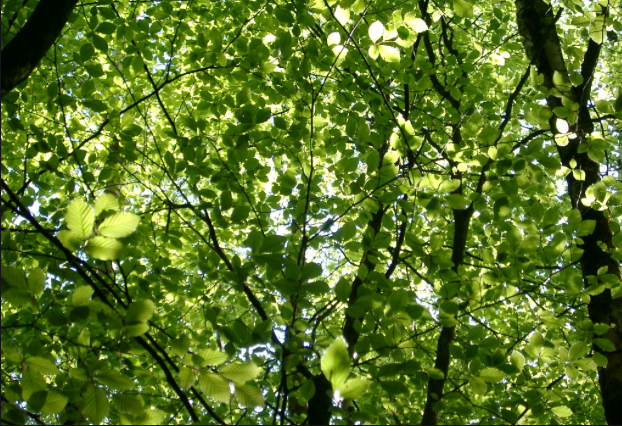
Fortunately, there is one basic action that can help us adapt to the hotter reality: planting trees. By starting to plant trees now, and absolutely everywhere possible, they will be mature when the heat wave reaches new extremes.
Planting trees creates multiple victories for communities. Trees improve air quality, filter stormwater, add beauty, sequester carbon, and most importantly for the heat wave, provide shade. New research shows that cities with robust urban forests are cooler by as much as 10 degrees Fahrenheit. Further, access to shade in the increasingly hot time is a social justice issue. Poorer neighborhoods have much less tree cover than their wealthier neighbors. Lack of shade must not become another indicator of inequality in our communities: access to it will be as vital as access to water and health care.
Communities in the region should begin developing “Shade City” plans to plant millions of trees across the region. Crucially, these plans should focus on creating diverse urban forests with climate appropriate trees and not simply a monoculture. Trees should be planted in parks and near schools, churches and hospitals, factories and streams, along streets and trails, and in so many other places. Unnecessary pavement should be ripped up to make way for trees. And of course every homeowner should add to the forest.
To accomplish the Shade City vision, funding for planting and maintenance as well as a sense of institutional and personal stewardship must become part of the region’s way of life. Positively too, this is economic development – think tree nurseries – and a job creation opportunity: imagine a Shade City Corps, modeled on the Civilian Conservation Corps, to plant and maintain trees.
Lamentably, no community in the region is as yet contemplating such massive tree plantings. For example,the Spokane city council recently voted to support increasing tree canopy in the city. These plans would increase tree coverage by 7%, to a total of 30% across the city. This is a good step, supported by many hard working people; but much, much more is needed.
Shade Cities can be our gift to the future. And even if a disbelief in the climate crisis is central to your dream of creating a new US state in the region, please help plant trees, just in case. The climate crisis won’t stop at new state lines, regardless of what the residents believe. That’s not throwing shade, that’s pleading for some.
SA: The article below is an interesting take – one I think I agree with. While humans are presently fucking things up but good for themselves and most of the rest of life as well, this is but a blip in the cosmic scale of things. If we do have an Anthropocene Epoch, it will be the shortest ever. Once we either decide to voluntarily end fossil fuels or they run out (and they will) then human capacity to drastically alter the planet will end as well.
“The idea of the Anthropocene inflates our own importance by promising eternal geological life to our creations. It is of a thread with our species’ peculiar, self-styled exceptionalism—from the animal kingdom, from nature, from the systems that govern it, and from time itself. This illusion may, in the long run, get us all killed. We haven’t earned an Anthropocene epoch yet. If someday in the distant future we have, it will be an astounding testament to a species that, after a colicky, globe-threatening infancy, learned that it was not separate from Earth history, but a contiguous part of the systems that have kept this miraculous marble world habitable for billions of years.” Read the rest here

 steve austin