The Limits of Renewable Energy

Excellent research in the full report

By Philippe Gauthier:  “Due to the various constraints outlined above, it seems clear that renewables will not completely replace fossil fuels for existing energy needs. The transition will be partial, perhaps in the range of 30-50 per cent. Given that, in the meantime, the depletion of oil and gas resources will reduce the quantity of fossil fuels available, we may well have to rely on much less energy than is available to us at the current moment. This will put the nail in the coffin of economic growth as we know it.

What also seems clear is that the energy transition would be easier if we set our sights lower and agreed to dial down our level of material consumption. The idea isn’t as far-fetched as it might seem. With a 30-per-cent drop in GDP, we would revert to a standard of living equivalent to that enjoyed in 1993, while a 50-per -cent drop would mean a standard of living equivalent to 1977. A 50-per-cent reduction in energy consumption would bring us back to the level prevailing in 1975, while an 80-per-cent reduction would be similar to the 1950s. This is hardly a return to the Middle Ages. Our parents and grandparents didn’t rub sticks together in caves!

What’s crucial to take away from this discussion is that there are no purely technical solutions to the problems we face. To be successful, the energy transition must also be based on a change in needs and habits. For that to happen, we need some critical distance from the dominant discourse around the energy transition, green growth and the circular economy. These concepts are not the path to salvation. On the contrary, they serve to reaffirm faith in industrial capitalism as the system with all the solutions.

The obstacles to the transition to renewable energy reveal the limits of mainstream thinking and the impossibility of never-ending growth. Technological change will not suffice. We need to rethink consumerism and growth, which is all but impossible within the current capitalist framework.

Degrowth may be a more difficult road to travel, but it is more likely to get us where we need to go without planetary climate upheaval and without exacerbating social inequality.”

Read here

Research: Our economic model must change

Let us first take a glance at what economies need to accomplish, in concrete terms. They need to transform the ways in which energy, transport, food, and housing are produced and consumed (O’Neill et al. 2018). The result should be production and consumption that provides decent opportunities for a good life while dramatically reducing the burden on natural ecosystems. In terms of greenhouse gases, global net emissions should be zero around 2050 – in Europe and the US by around 2040. (Rockström et al. 2017)

READ HERE:  Global Sustainable Development Report 2019 drafted by the Group of independent scientists

Scientists Warn the UN of Capitalism’s Imminent Demise
A climate change-fueled switch away from fossil fuels means the worldwide economy will fundamentally need to change.

Capitalism as we know it is over. So suggests a new report commissioned by a group of scientists appointed by the UN Secretary-General. The main reason? We’re transitioning rapidly to a radically different global economy, due to our increasingly unsustainable exploitation of the planet’s environmental resources.

Climate change and species extinctions are accelerating even as societies are experiencing rising inequality, unemployment, slow economic growth, rising debt levels, and impotent governments. Contrary to the way policymakers usually think about these problems, the new report says that these are not really separate crises at all.

Rather, these crises are part of the same fundamental transition to a new era characterized by inefficient fossil fuel production and the escalating costs of climate change. Conventional capitalist economic thinking can no longer explain, predict, or solve the workings of the global economy in this new age, the paper says.

Past four years hottest on record, data shows

World running out of time to combat climate change, warns meteorological organisation

by Fiona Harvey, The Guardian

Global temperatures have continued to rise in the past 10 months, with 2018 expected to be the fourth warmest year on record.

Average temperatures around the world so far this year were nearly 1C (1.8F) above pre-industrial levels. Extreme weather has affected all continents, while the melting of sea ice and glaciers and rises in sea levels continue. The past four years have been the hottest on record, and the 20 warmest have occurred in the past 22 years.

The warming trend is unmistakeable and shows we are running out of time to tackle climate change, according to the World Meteorological Organization, which on Thursday published its provisional statement on the State of the Climate in 2018. The WMO warned that, on current trends, warming could reach 3C to 5C by the end of this century.

“These are more than just numbers,” said Elena Manaenkova, the WMO deputy secretary Continue reading “Past four years hottest on record, data shows”

Portrait of a planet on the verge of climate catastrophe

As the UN sits down for its annual climate conference this week, many experts believe we have passed the point of no return
by Robin McKie, The Guardian

On Sunday morning hundreds of politicians, government officials and scientists will gather in the grandeur of the International Congress Centre in Katowice, Poland. It will be a familiar experience for many. For 24 years the annual UN climate conference has served up a reliable diet of rhetoric, backroom talks and dramatic last-minute deals aimed at halting global warming.

But this year’s will be a grimmer affair – by far. As recent reports have made clear, the world may no longer be hovering at the edge of destruction but has probably staggered beyond a crucial point of no return. Climate catastrophe is now looking inevitable. We have simply left it too late to hold rising global temperatures to under 1.5C and so prevent a future of drowned coasts, ruined coral reefs, spreading deserts and melted glaciers.

One example was provided last week by a UN report that revealed attempts to ensure fossil fuel emissions peak by 2020 will fail. Indeed the target will not even be reached by 2030. Another, by the World Meteorological Organization, said the past four years had been the warmest on record and warned that global temperatures could easily rise by 3-5C by 2100, well above that sought-after goal of 1.5C. The UK will not be exempt either. The Met Office said summer temperatures could now be 5.4C hotter by 2070.

At the same time, prospects of reaching global deals to halt emissions have been weakened by the spread of rightwing populism. Not much to smile about in Katowice.

Nor will the planet’s woes end in 2100. Although most discussions use the year as a Continue reading “Portrait of a planet on the verge of climate catastrophe”

Climate Change in the Northwest

Northwest numbers in the climate assessment
2: Degrees the temperature has warmed in the Northwest since 1900.

5: Projected percentage increase of irrigation needed in the Columbia River Basin by the 2030s as a result of climate change.

22: Potential percentage loss in salmon habitat in Washington by the end of this century under a high-emissions scenario.

70: Potential percentage of lost revenue to snow-related businesses under high emissions scenario.

Shawn Vestal: On climate, we ignore Chapter 24 at our peril

Hotter, drier, smokier summers. More rain and less snow in the winters. Erratic weather patterns – from droughts to overflowing rivers and coastal surges.

Sunburned apples and softer berries. More heat stroke and Lyme disease. Less skiing and boating, more respiratory problems, suffering fisheries.

Chapter 24 of the Fourth National Climate Assessment is a real bummer. Those of us living in the Pacific Northwest – along with everyone on the planet – ignore it at our peril.

The Fourth National Climate Assessment is an exhaustive, detailed, deeply documented alarm bell – much like the First National Climate Assessment, the Second National Climate Assessment and the Third National Climate Assessment. A product of U.S. Global Change Research Program and relying on work from 13 federal agencies, the assessment lays out a case for action that should be utterly impervious to the increasingly desperate counterarguments of the rejectionists.

It also includes a thorough, detailed, exhaustively cited examination of the effects of a changing climate here in the Northwest. Chapter 24 – it’s not short, but it’s worth your time if you’re sincerely interested in the current state of knowledge about the warming planet and the way it might affect you here at home: (nca2018.globalchange.gov/chapter/24/).

Here are a few of the lowlights from Chapter 24, summarized.

The region has already warmed substantially
The region has warmed nearly 2 degrees Fahrenheit since 1900, a change that is at least Continue reading “Climate Change in the Northwest”

“there is no right to a climate system capable of sustaining human life”

Screen Shot 2018-11-23 at 9.27.48 AM

From Nature.comJuliana v. United States: The plaintiffs, who include 21 people ranging in age from 11 to 22, allege that the government has violated their constitutional rights to life, liberty and property by failing to prevent dangerous climate change. They are asking the district court to order the federal government to prepare a plan that will ensure the level of carbon dioxide in the atmosphere falls below 350 parts per million by 2100, down from an average of 405 parts per million in 2017.

By contrast, the US Department of Justice argues that “there is no right to ‘a climate system capable of sustaining human life’” — as the Juliana plaintiffs assert.

The Irresistible Urge to Build Cities From Scratch

Screen Shot 2018-11-15 at 8.41.42 AM

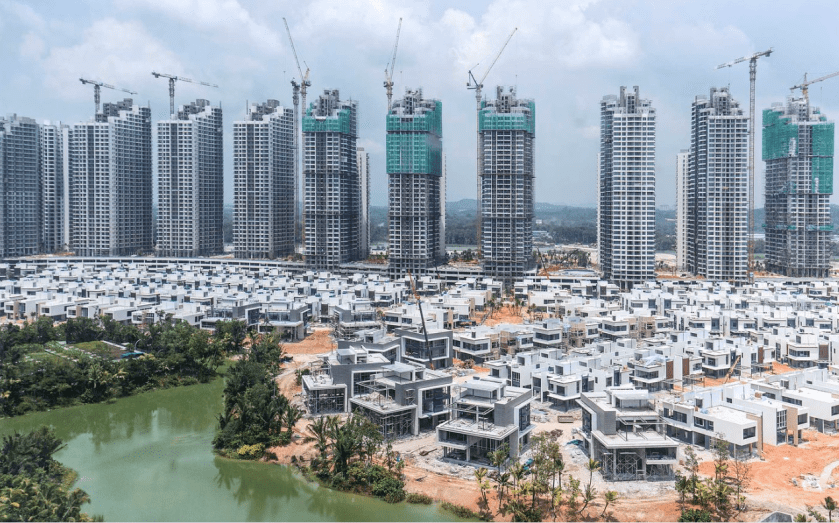
Article from Bloomberg that offers visions of master planned mega cities.  The article details why so many of these ego driven fantasies are not succeeding and concludes that it may be the result of poor economics, or poor location, or poor design or even misguiding the impact of driverless cars could have on urban planning.

There is nothing in the article about issues of climate change exacerbation – meaning that building these cities is extremely carbon intensive – or habitat destruction or peak oil or social inequality or anything else that will ensure that these places will always be failures.

We dont get a do over as the impending catastrophe looms.  We go into that future with the cities we have.  Imagine all the positives that could have been if energy and resources weren’t squandered on these places, places that will be unlivable very soon.

Towards an economy of care and craft and creativity

Since business as usual is not an option and since we just can’t surrender to the gloom, we must imagine positive ways of addressing our predicament.   Scientist Tim Jackson offers this as part of a larger essay:

Which brings us back I suppose to Ronald Reagan’s stirring evocation of the unlimited power of human intelligence, imagination and wonder. My students, generally speaking, agree with that part of the former President’s finest lines. Why should they not? Our ingenuity is not just legendary, it’s evolutionary. There’s very good evidence to show that it is partly responsible for, and certainly complicit in our enormous ‘success’ as species. A success which looks anything other than that, of course, for most other species on the planet.

But why should we not turn that intelligence, imagination and wonder to new and exciting purposes? To improving the efficiency of material cycles. To reducing the cost of renewable energy still further. To developing technologies that work in harmony with natural ecosystems rather than against them. Or perhaps towards a greater sense of material sufficiency. Towards an economy of care and craft and creativity. Towards concern for others. Towards better stewardship of the planet.

That is a comforting and encompassing vision:  care, craft, and creativity. How can landscape architecture and urban planning take that on?

The Earth is in a death spiral. It will take radical action to save us

Climate breakdown could be rapid and unpredictable. We can no longer tinker around the edges and hope minor changes will avert collapse. 

Because we cannot save ourselves without contesting oligarchic control, the fight for democracy and justice and the fight against environmental breakdown are one and the same. Do not allow those who have caused this crisis to define the limits of political action. Do not allow those whose magical thinking got us into this mess to tell us what can and cannot be done.

By George Monbiot in The Guardian 

It was a moment of the kind that changes lives. At a press conference held by climate activists Extinction Rebellion last week, two of us journalists pressed the organisers on whether their aims were realistic. They have called, for example, for UK carbon emissions to be reduced to net zero by 2025. Wouldn’t it be better, we asked, to pursue some intermediate aims?

A young woman called Lizia Woolf stepped forward. She hadn’t spoken before, but the passion, grief and fury of her response was utterly compelling. “What is it that you are asking me as a 20-year-old to face and to accept about my future and my life? … This is an emergency. We are facing extinction. When you ask questions like that, what is it you want me to feel?” We had no answer.

Softer aims might be politically realistic, but they are physically unrealistic. Only shifts commensurate with the scale of our existential crises have any prospect of averting them. Hopeless realism, tinkering at the edges of the problem, got us into this mess. It will not get us out.

Public figures talk and act as if environmental change will be linear and gradual. But the Continue reading “The Earth is in a death spiral. It will take radical action to save us”